
Research
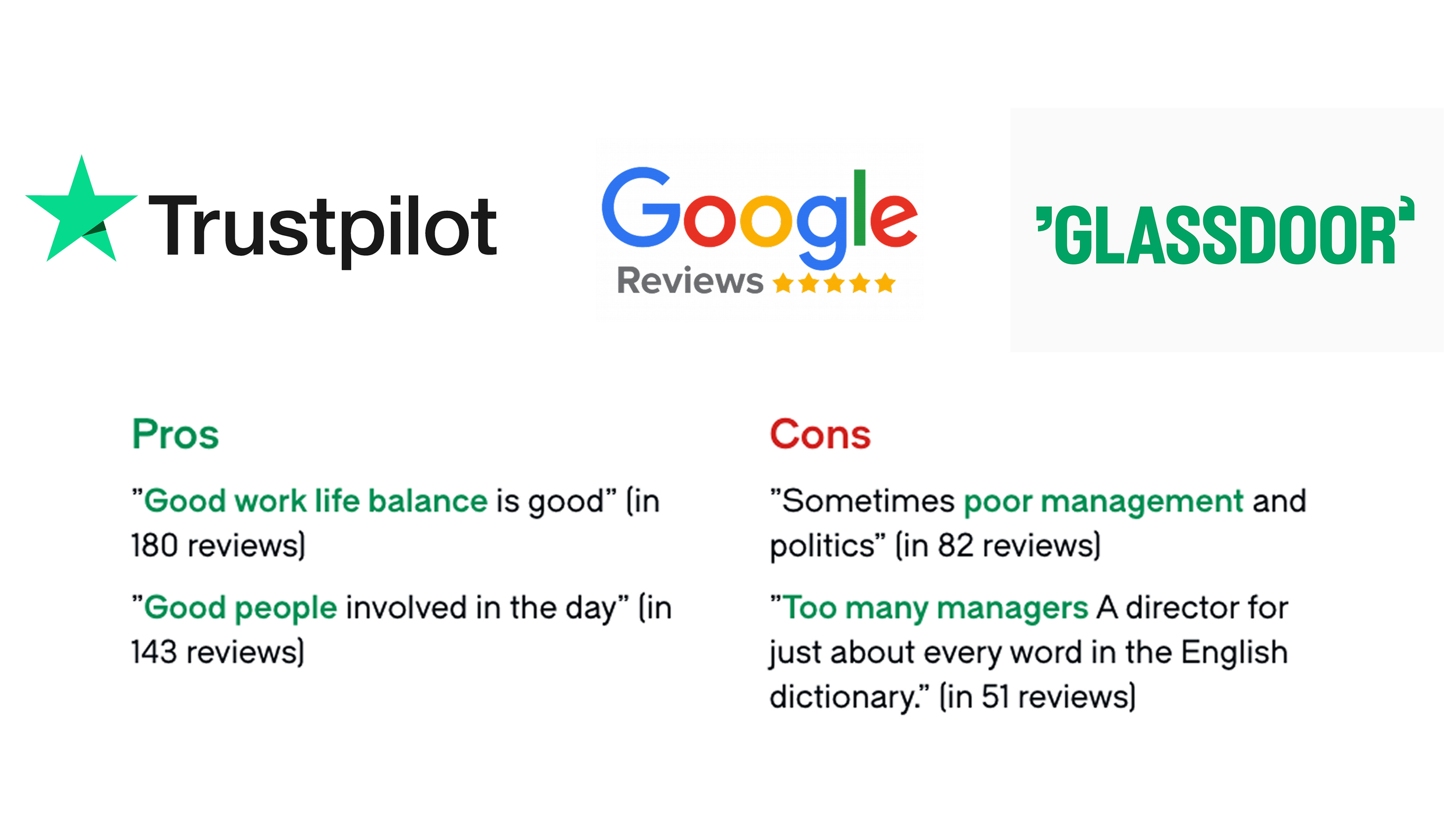
The project manager and I laid out an agile framework and roadmap, validating an MVP with all stakeholders. I conducted desktop research from several review platforms (TrustPilot, Google Reviews, Glassdoor) to gauge customer and employee satisfaction and understand how decision-making affected the customers. Issues with finding platform numbers, app malfunctions, delays, and problems with purchasing tickets were endemic.
Gamification
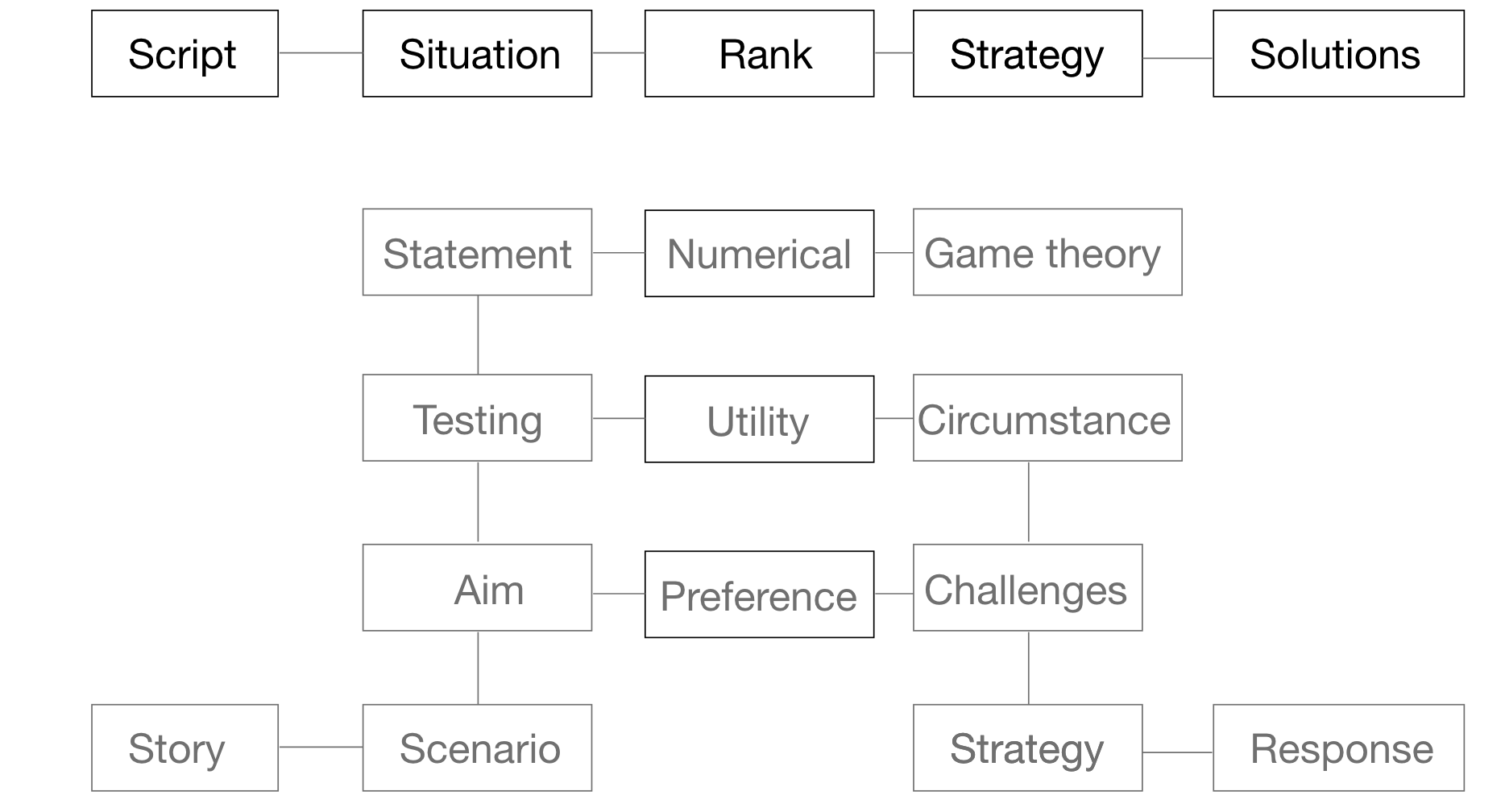
I delivered an architectural framework to hold scripted scenarios, integrating gamification and tasks around behavioural economics fallacies and psychological principles to motivate and enhance engagement to optimise learning outcomes.
Each scenario was predicated on white hat gamification techniques. A thorough review of each level eliminated the potential or evident situations of non-ethical dark designs or negative cognitive impact, complying with the zero risk appetite.
This framework was designed to facilitate deliverables from NIIT’s copywriters based on qualitative data collected from the workshop we hosted with Network Rail in the next phase of the project.
Discovery Workshop
NIIT | Network Rail Executives
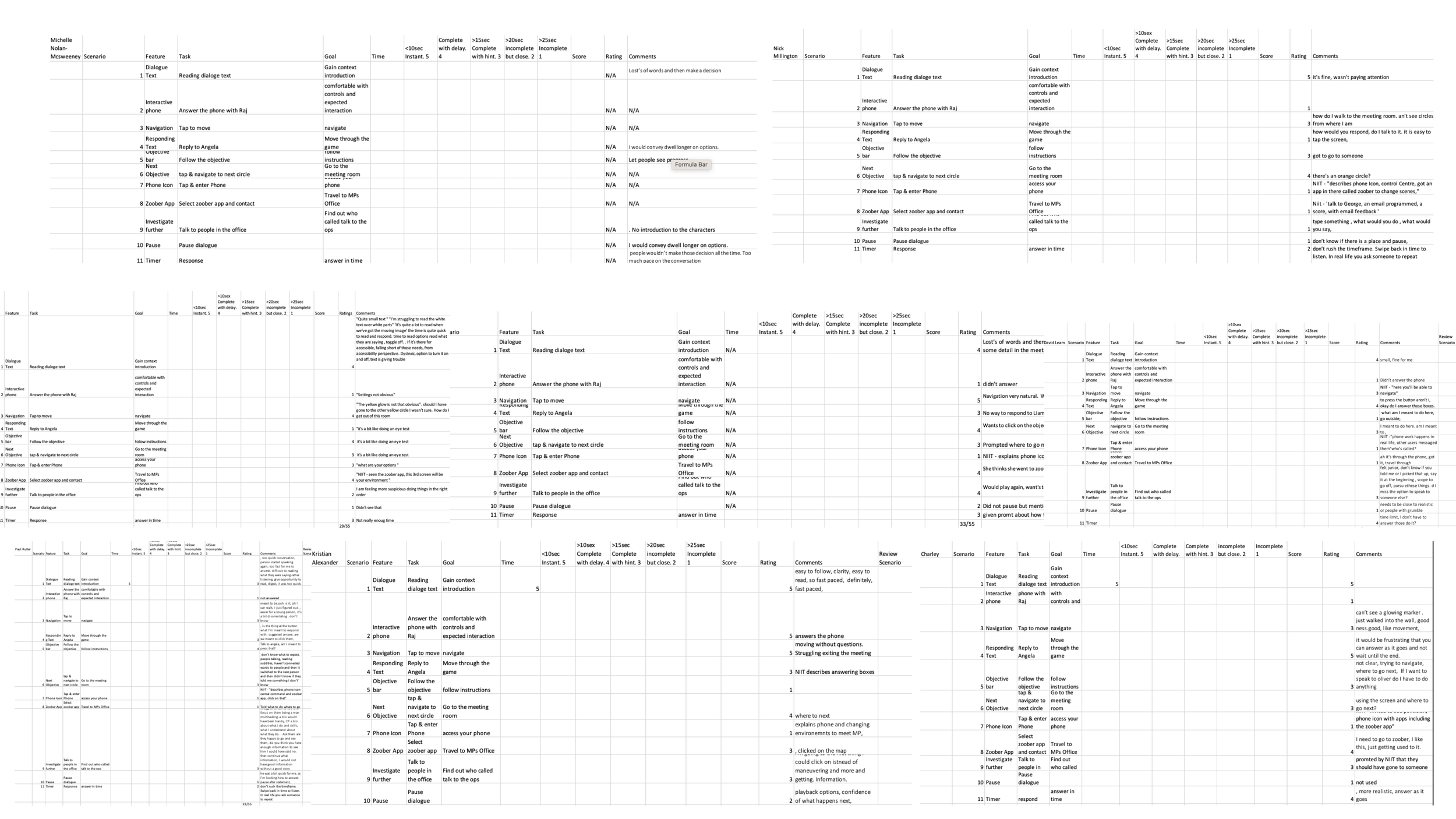
NIIT’s US creative team and I, flew into England to conduct a multi-day workshop with Network Rail. The aim was to extract problem statements and discover issues. With this rich data, I reviewed, codified, confirmed, categorized, and defined the hierarchy with all stakeholders.
The workshop built the foundation of introduction, scenario setting, criteria and content for iterations to take place. The game was oriented around a business model that bases the user experience at the centre, and was achieved by defining the culture and functions of maintenance, engineering, and operating with Network Rail Leaders.
Interviews
Talk out loud methods
Time on task
Card sorting
Scenario planning
Participants engaged with the scheme of the workshop and supporting framework introduced through parameters such as:
Mechanics: Rules of the game, elements and purposes
Dynamics: behaviour, interaction between users to be placed in the gamification situations
Perceptions/Aesthetics: user reaction and perception the learner has
VR Architecture
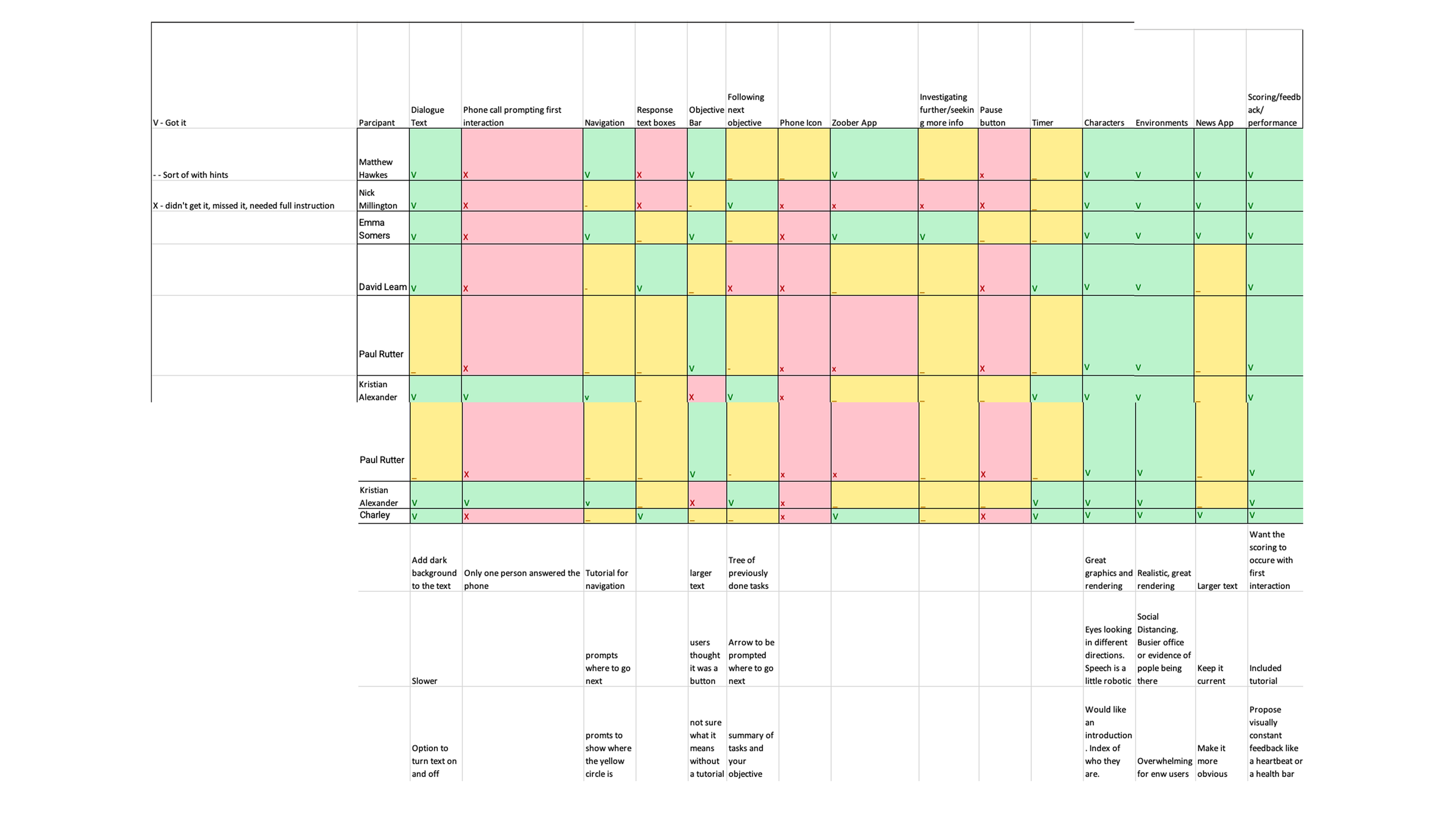
The US team and I met with our English-based team DMA Designs, who would build the VR experience to evaluate workshop findings and corroborate the project plan. To optimise how a learner may assimilate their environment, we had to bear in mind the approach a user may take in absorbing and assessing their scenario: The user experience needed to serve
Skimming (shallow examination)
Reading (careful examination)
Understanding (Silverman, 2000).

Designs
I designed, facilitated, and led the team of project managers, designers, and developers in optimising gamification strategies through storytelling and design.
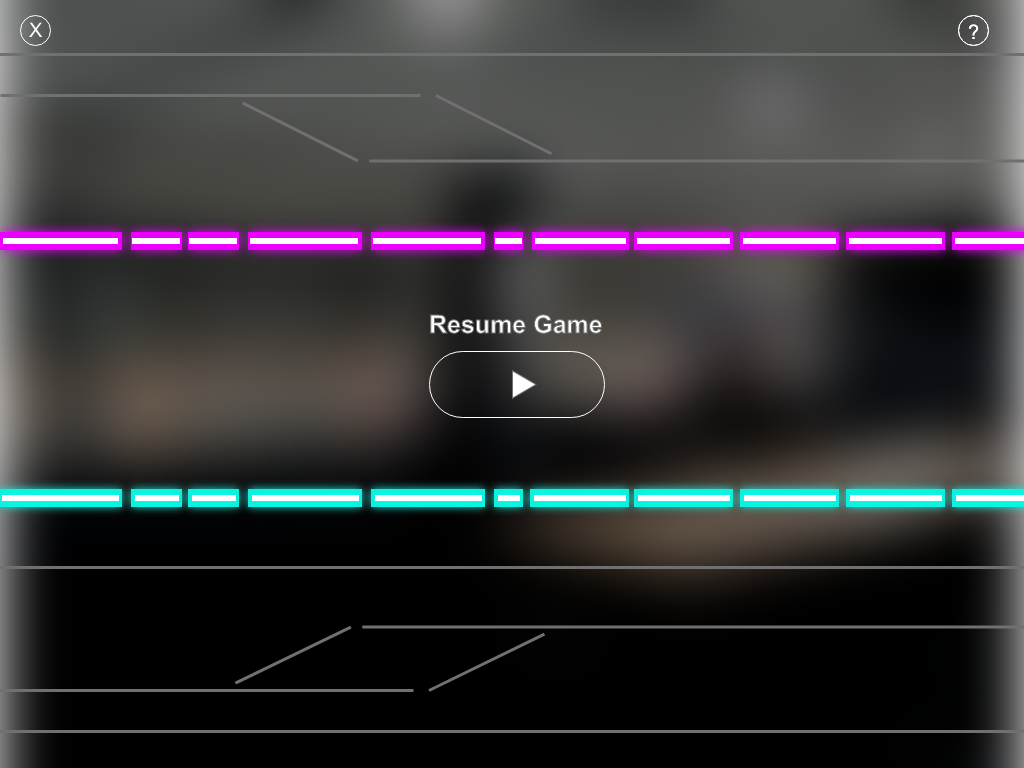
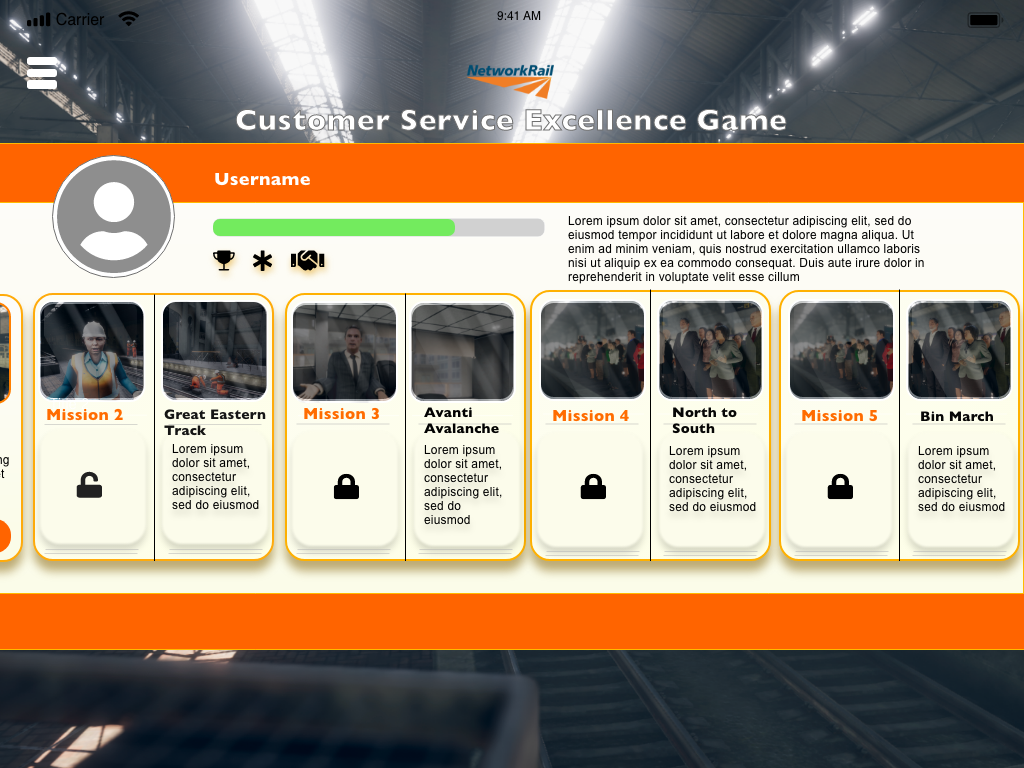
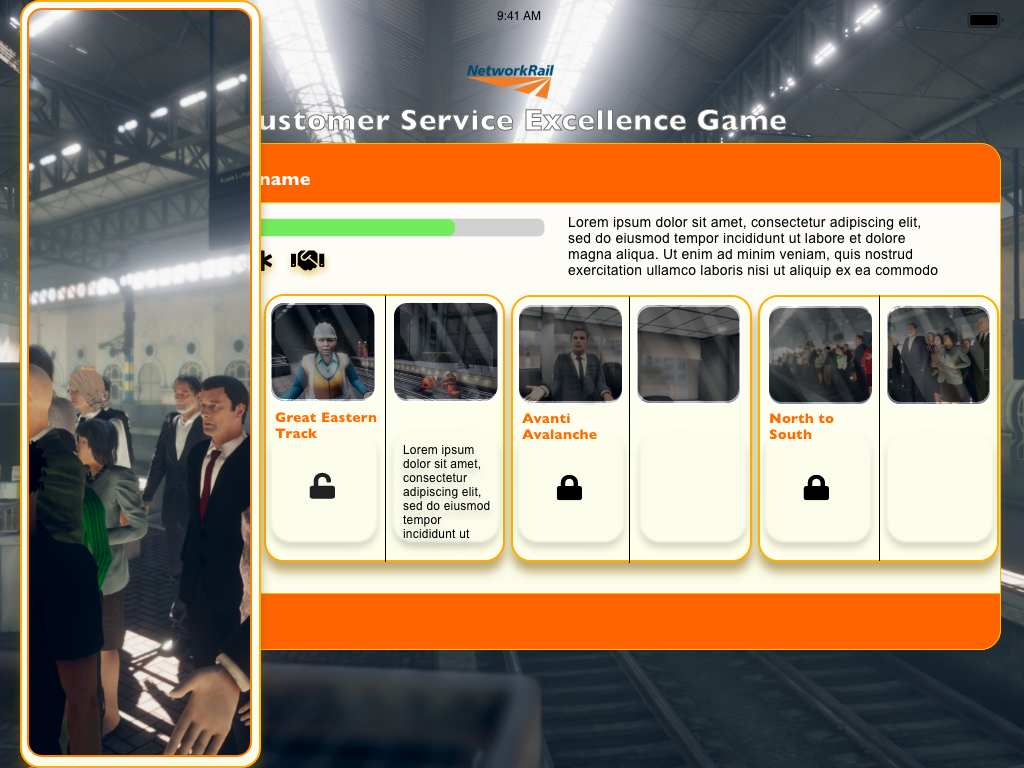
We needed to define clear states to indicate the user's progress in training and establish where and how to issue rewards through the game.
Psychological principles of motivation were deployed within various scenarios of the game to retain users, and ensure our users were informed.
Onboarding
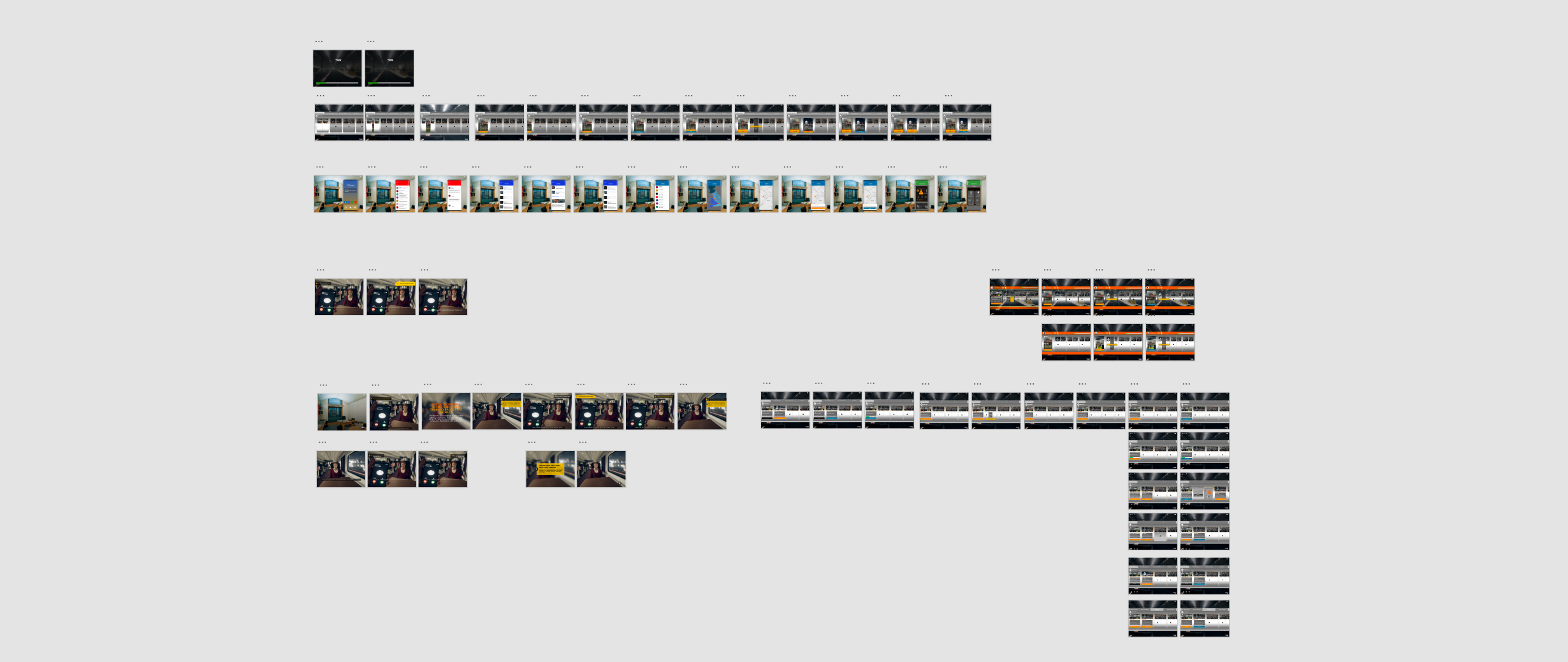
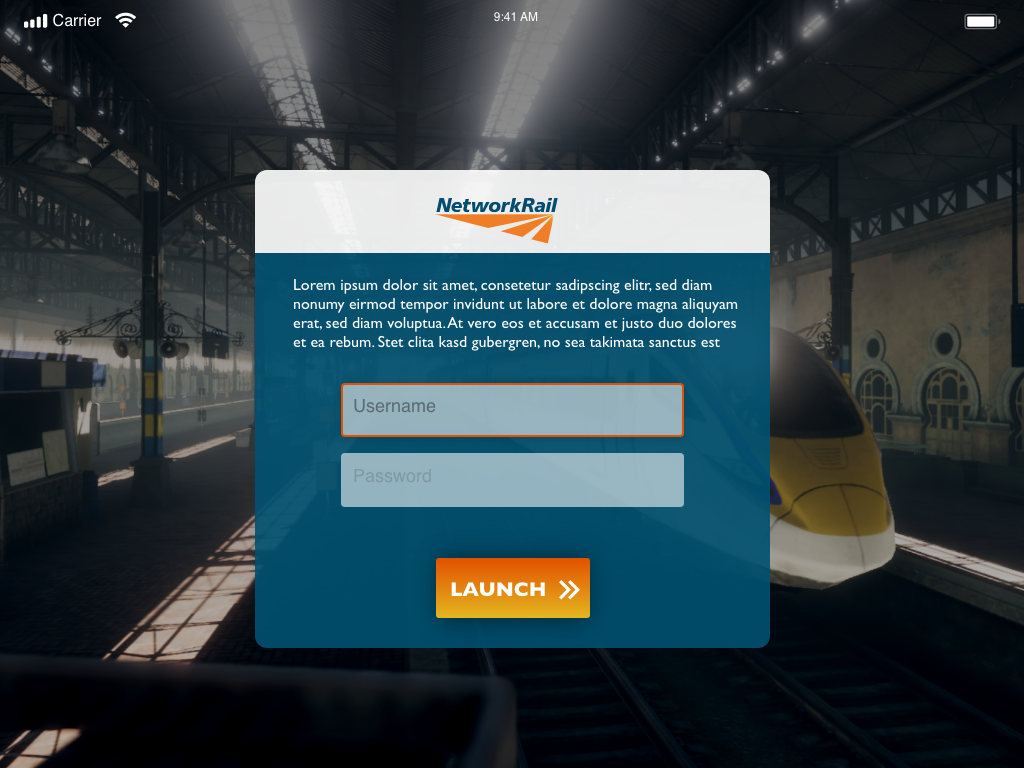
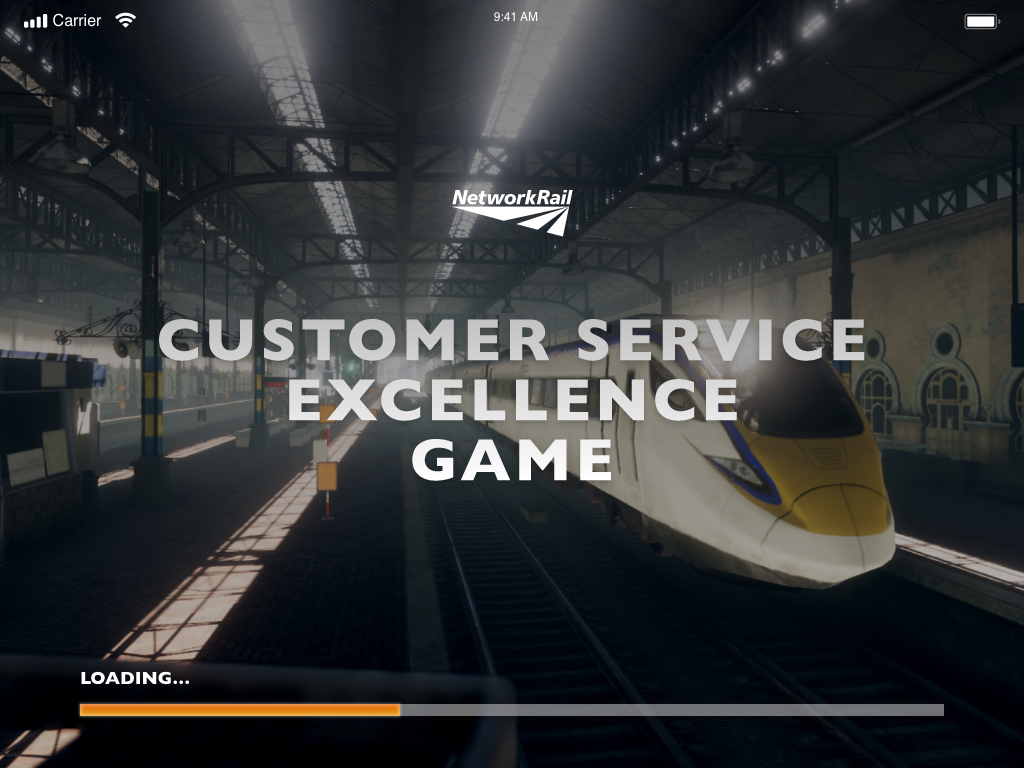
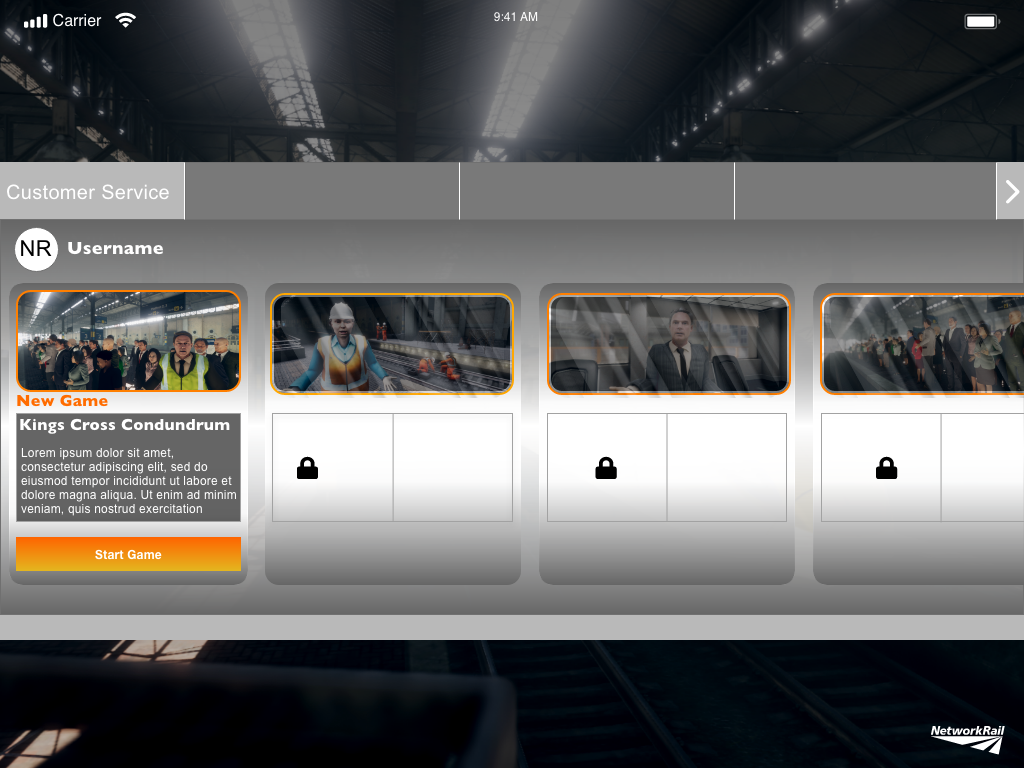
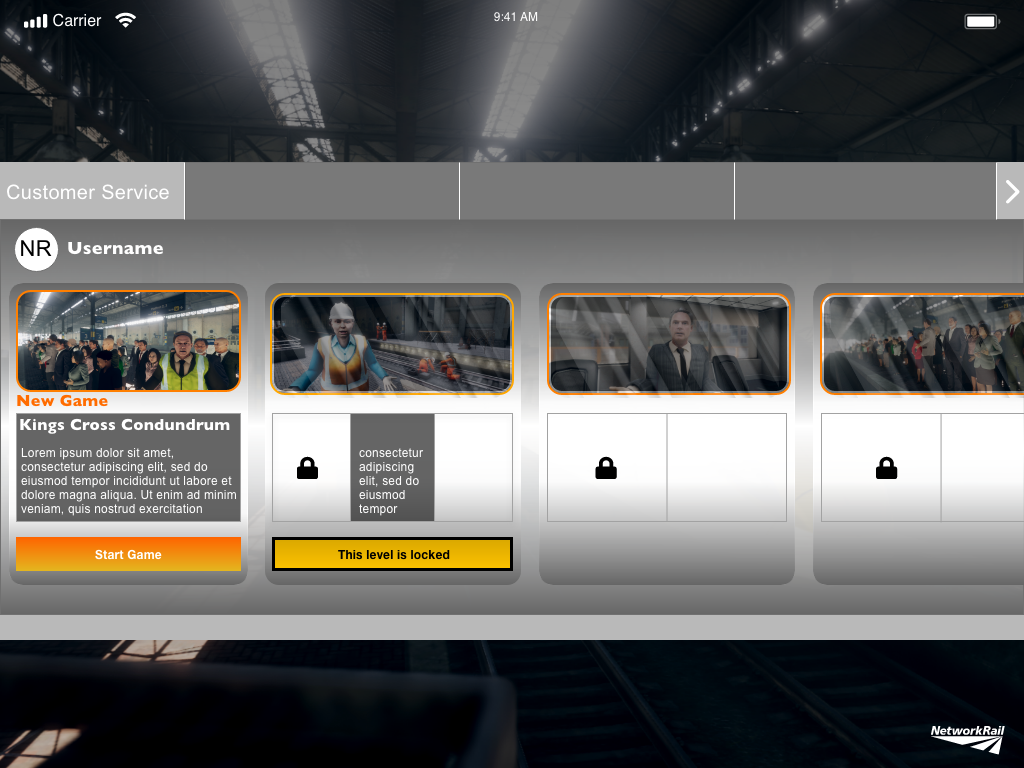
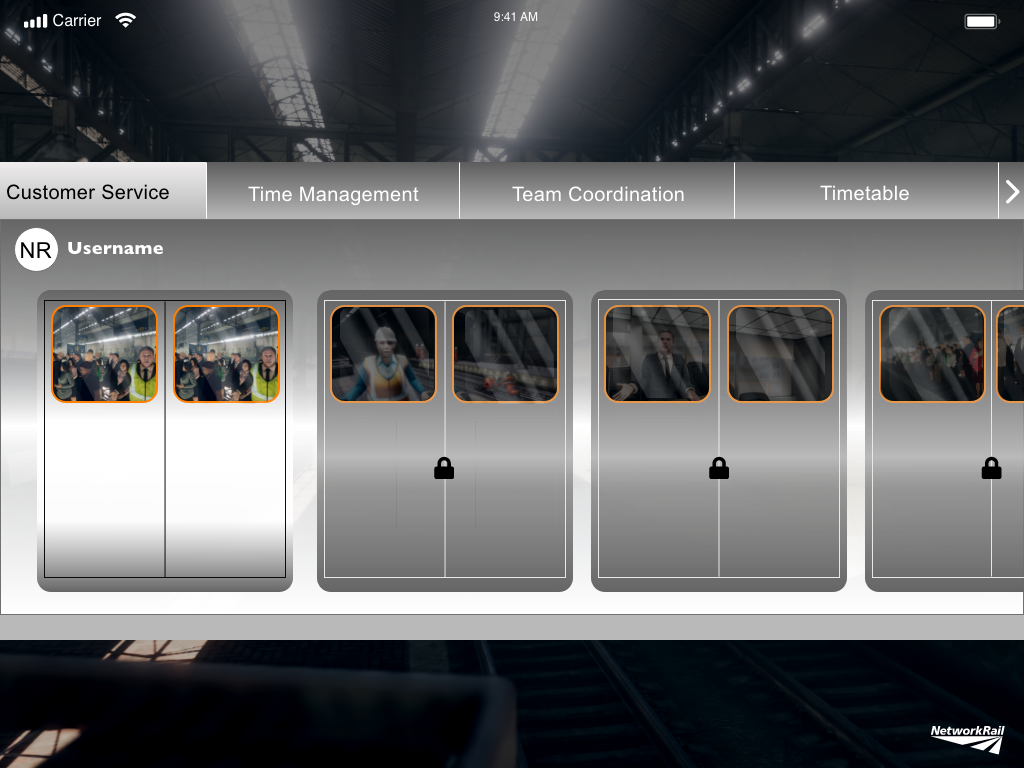
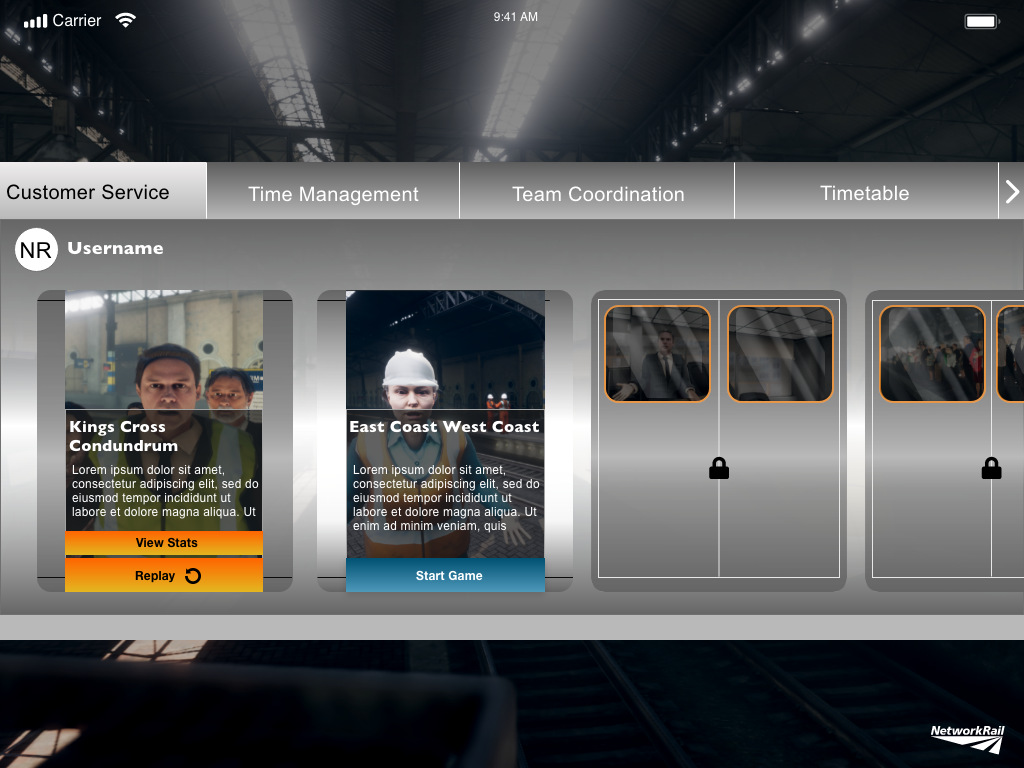
From our workshop with executives, it became apparent that our target audience was not familiar with gaming and tablet UIs. Therefore, clear labelling, states of play and descriptions were necessary for an easy and accessible user experience.
Hi-fi wireframes
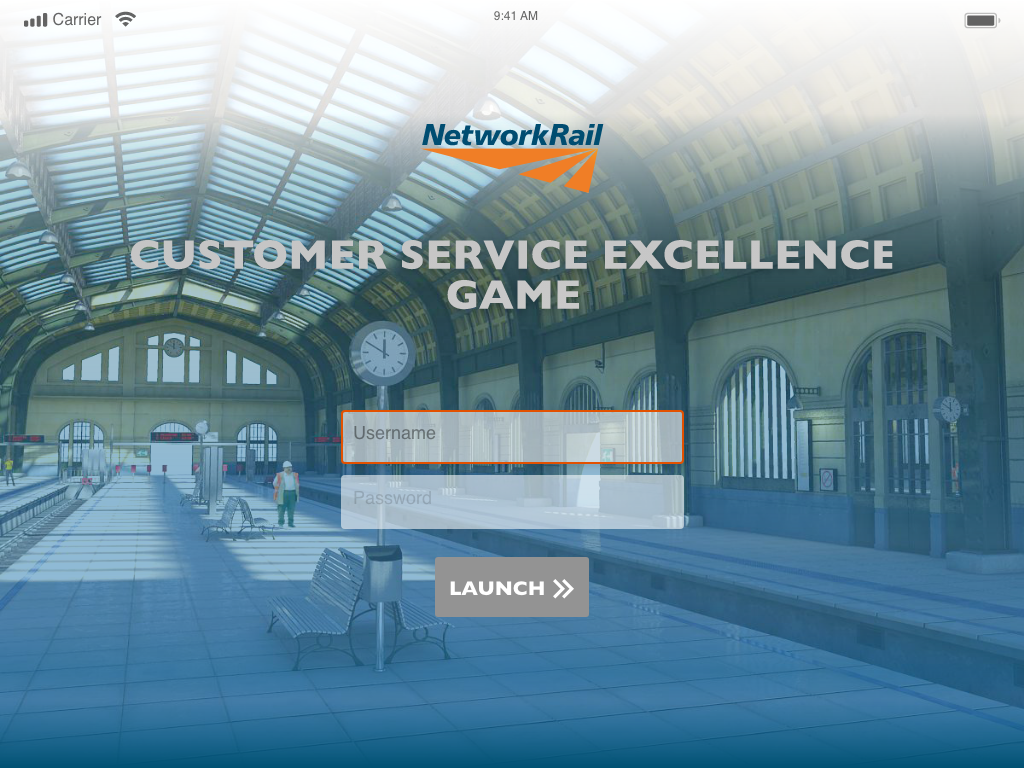
From our stakeholder workshops. Unique and targeted designs were requested to signal relevancy to Network Rail. Below are some wireframes and states explored during gameplay that would visually connect the user to the rail experience.
However, whilst in a particular level, it was necessary for the UI to be minimalistic, straight forward and guiding.
Walkthrough
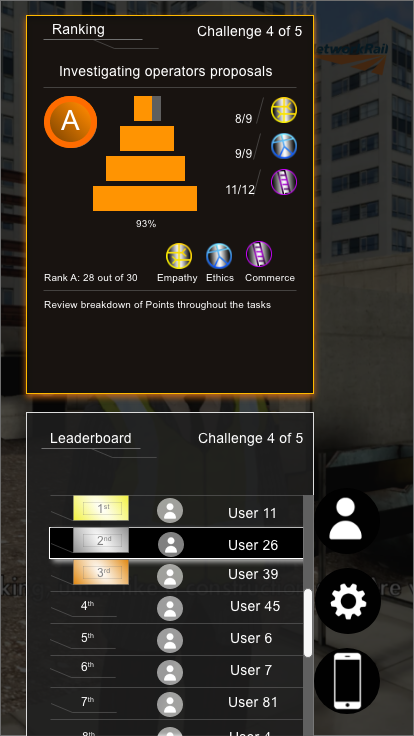
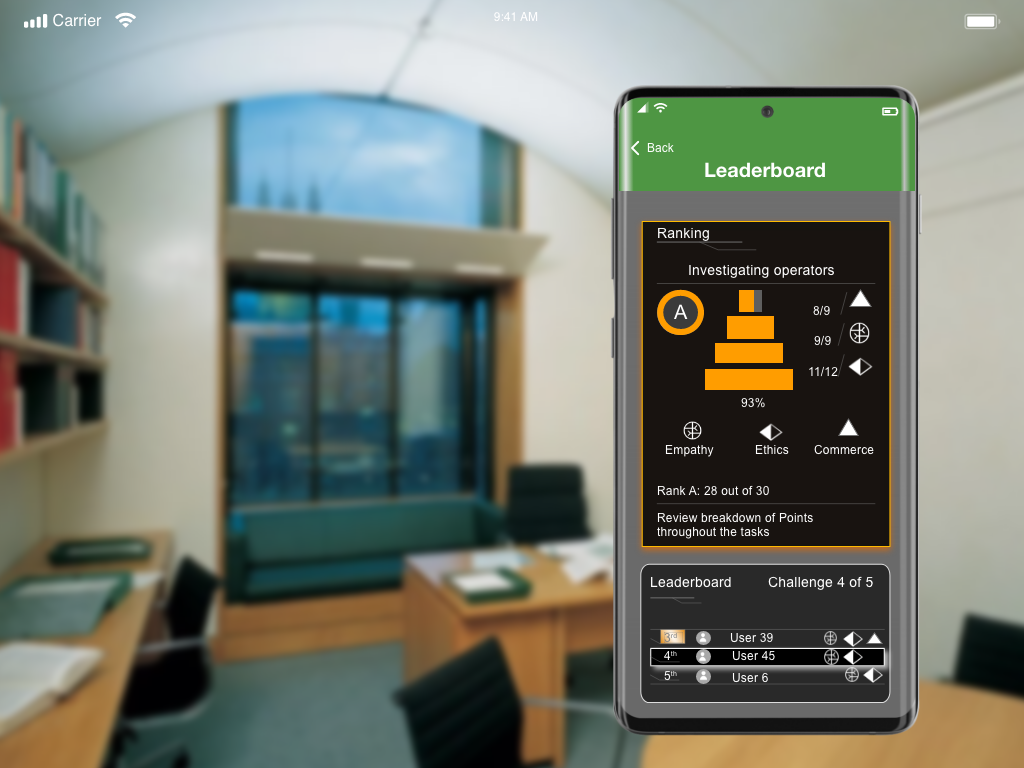
The final iteration took on SME feedback through testing. They guided us through policies, tasks, and processes undertaken by different departments in Network Rail. Below are some snapshots of steps the user must take to interact and progress through the game. Both samples below involve a mobile phone, a solution we utilised for users to engage with as it was familiar and we could leverage UI trends and standards.
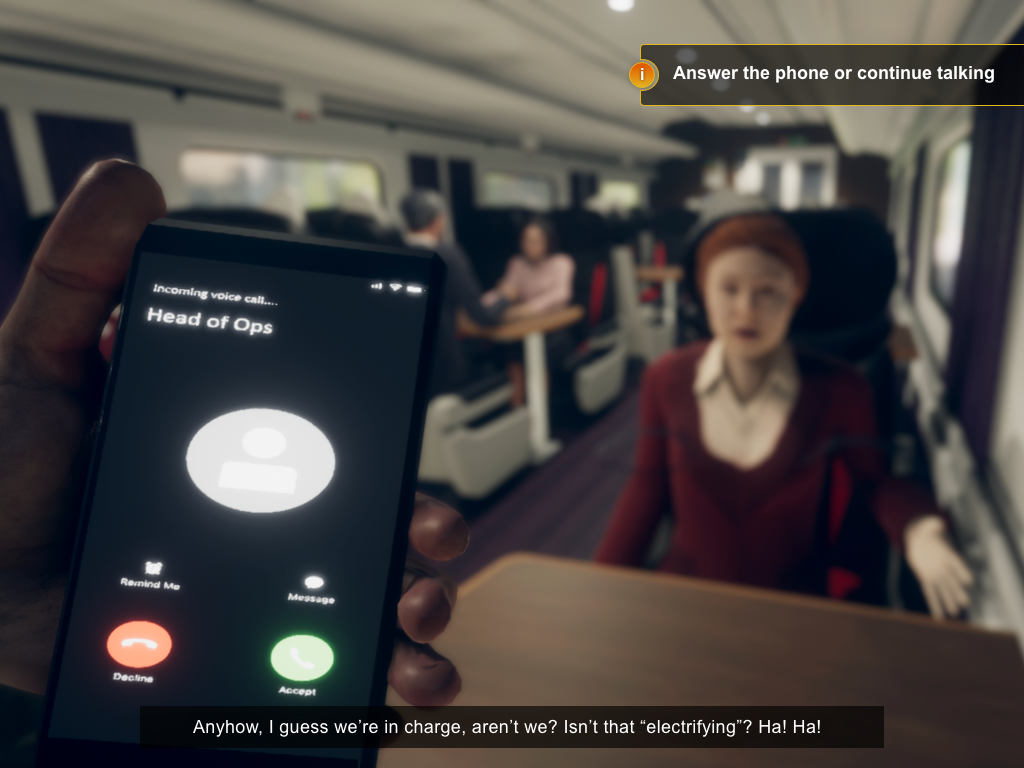
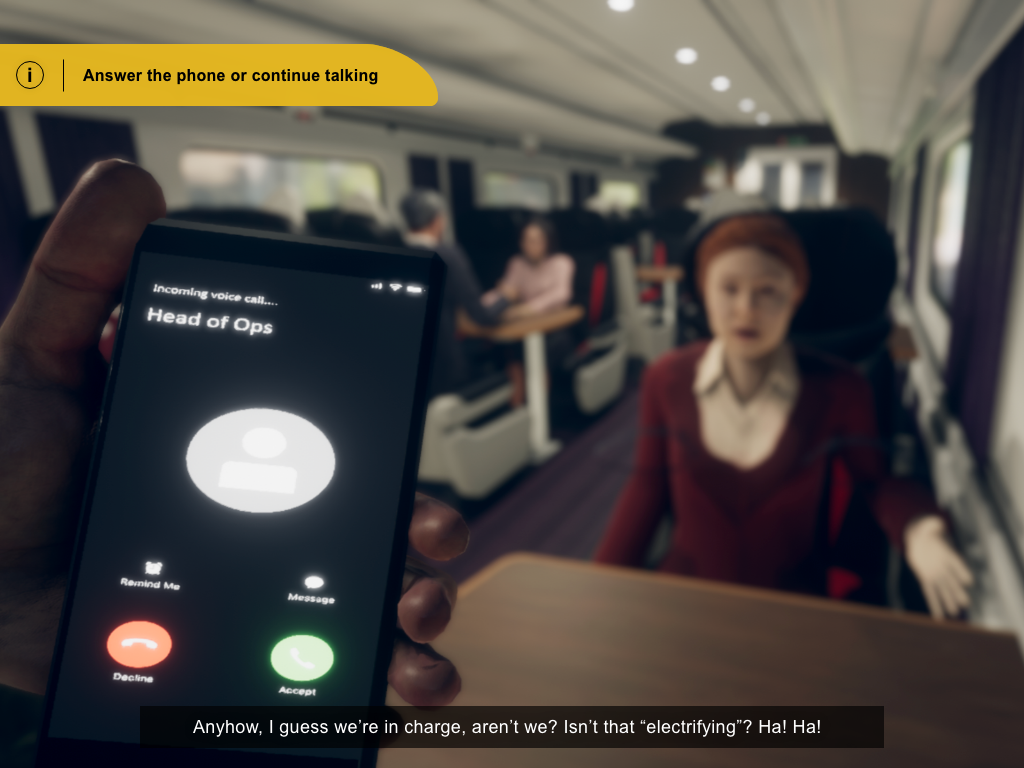
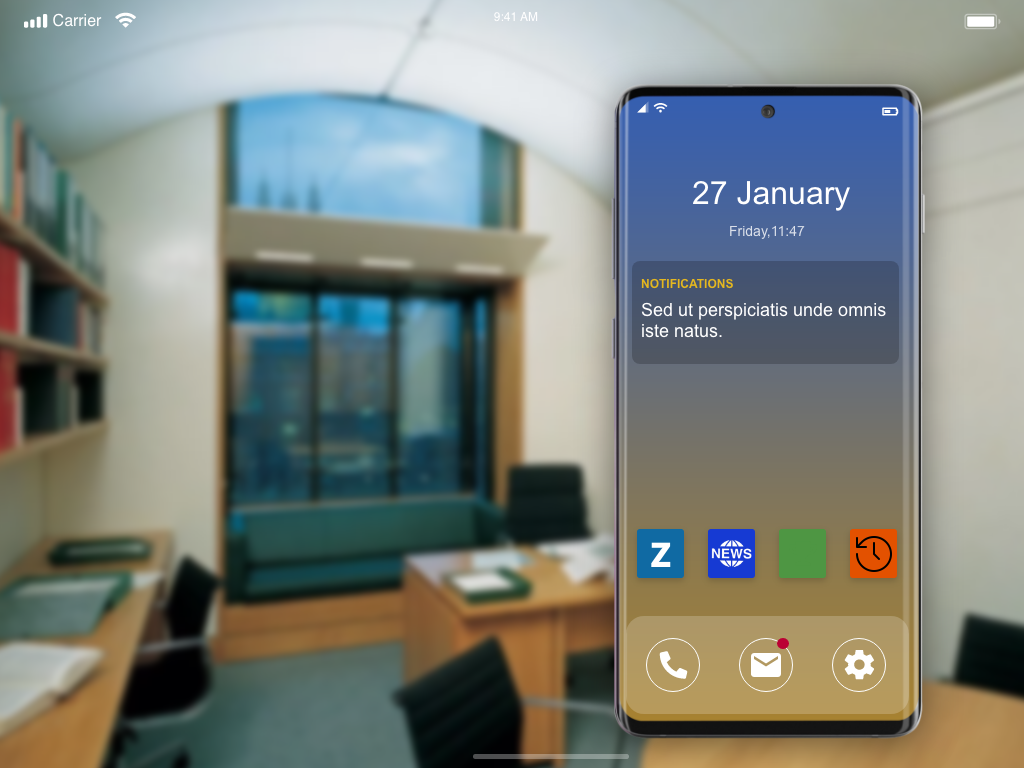
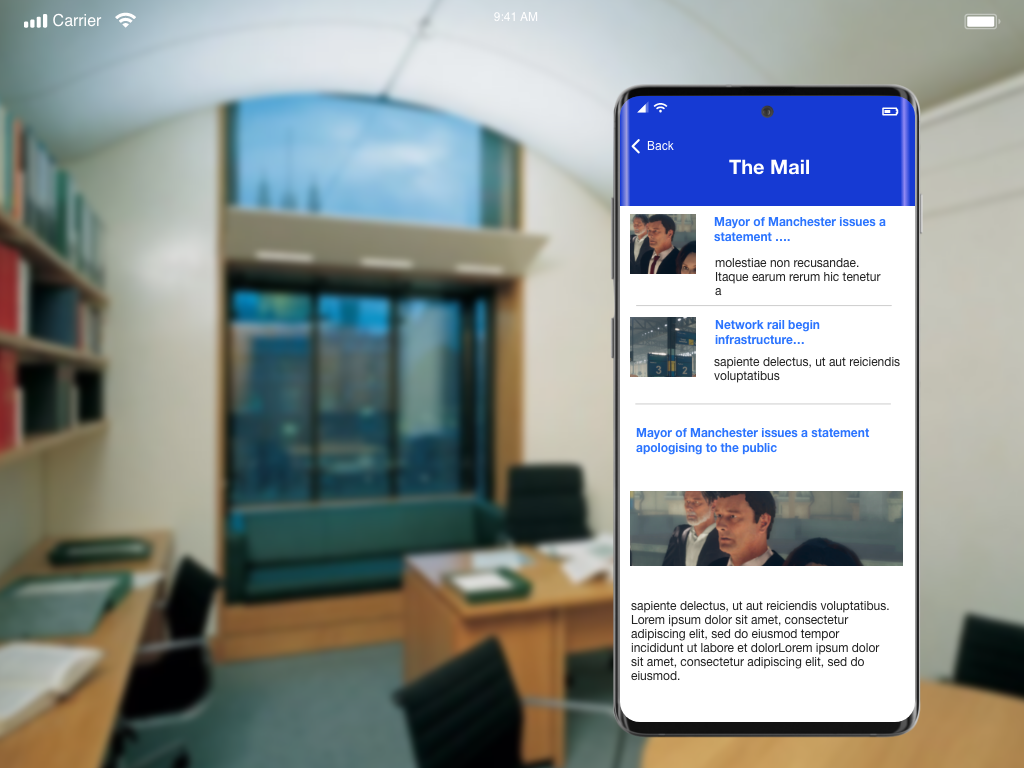
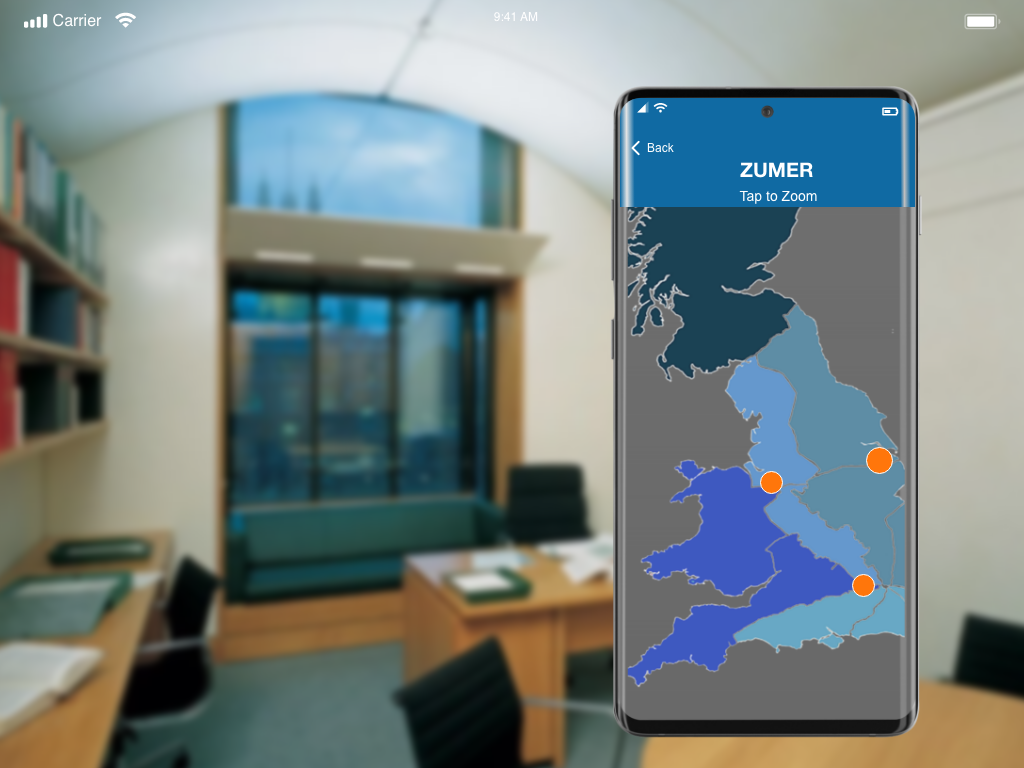
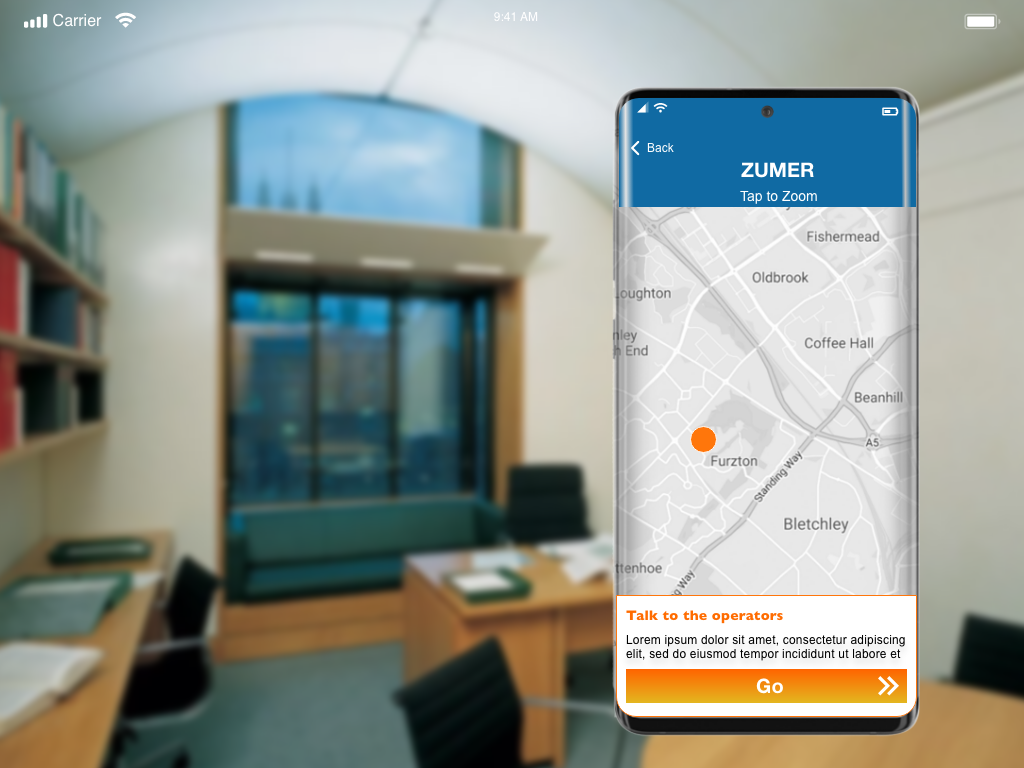
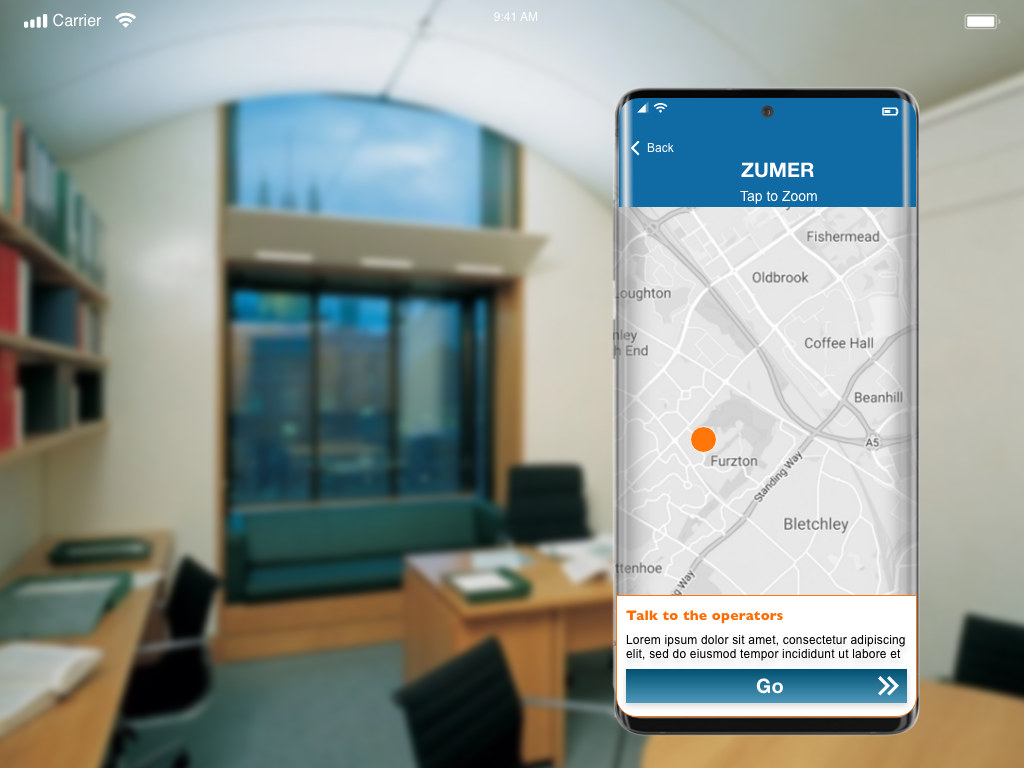
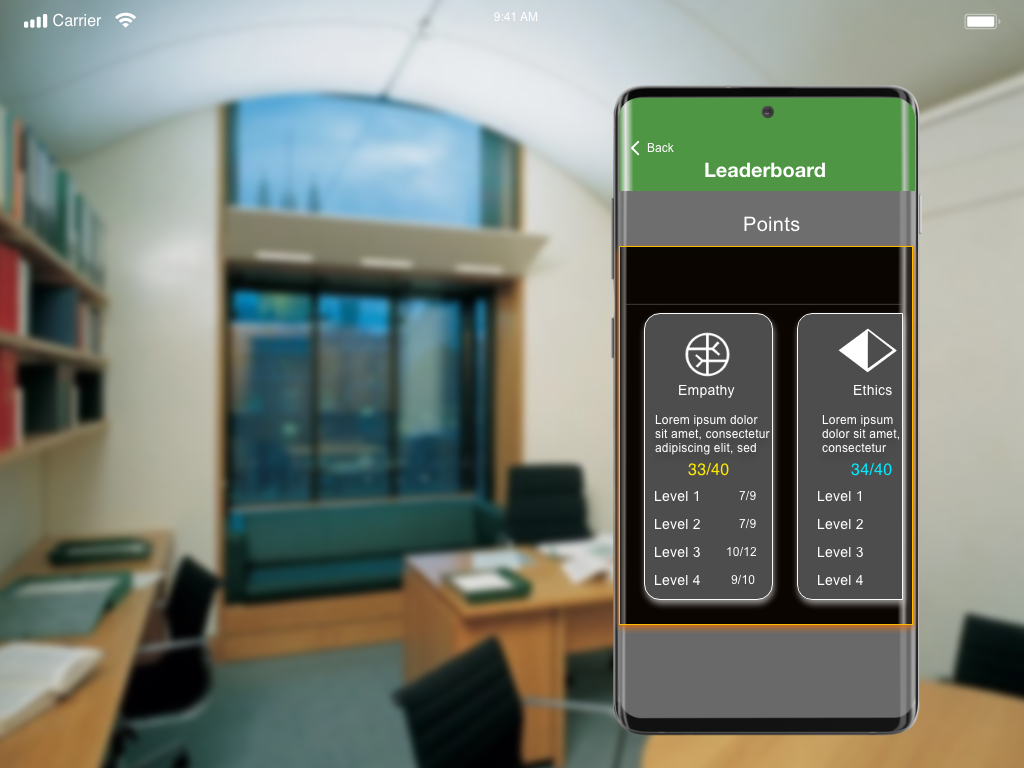
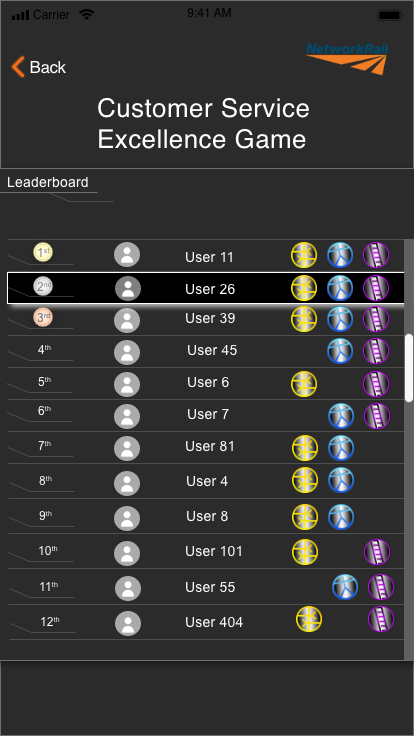
One of the extrinsic motivational strategies we implemented was a leadership board. Users could compete anonymously and were encouraged to climb the ladder. The initiative and objective of the game was to gain ground in empathy, ethics and commerce within Network Rail guidelines.
Results
The game was deployed. Network rail staff could learn about company engagement, management and policy through the interactive walkthroughs and scenarios. The VR training experience won the 2021 Brandon Hall Gold in the Best Use of Video for Learning category jointly with Network Rail for Passenger Service Professional Video Series.